Want to know more about Invasive, Keystone, Indicator, Extinct, Endangered, and Threatened Species?
Click here to learn more!
Choose one of the species!
Japanese Honeysuckle
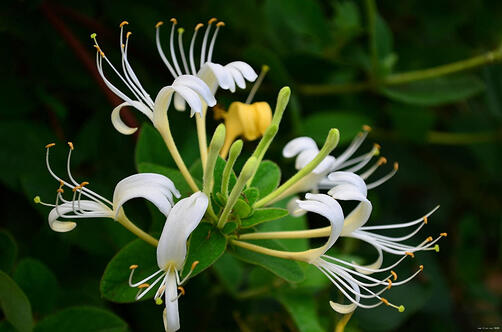
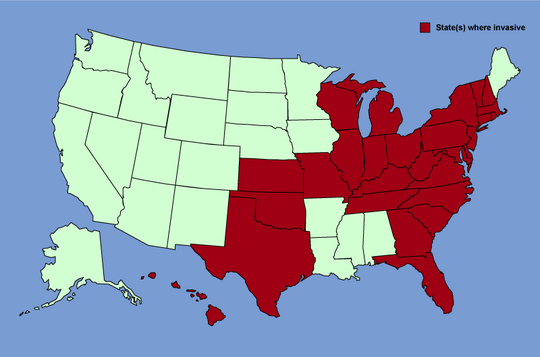
Background Info
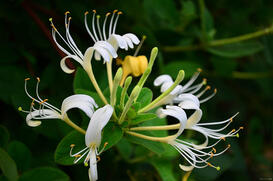
native to East Asia (Japan, Korea)introduced to the U.S as an ornamental plant, for erosion control, and for wildlife forage and cover
Reasons for Status
used for urinary disorders, headache, diabetes, rheumatoid arthritis, and cancersometimes applied to the skin for inflammation and itching, and to kill germs
Characteristics
a nonnative, trailing or twining, perennial lianastems are often 0.4 to 2 inches in diametercan grow to 18 feet or more in length
Solutions for Removal
mow or weed whack the vines as close to the ground as possibleallow them to re-sprout, then spray the sprouts with a 5 percent solution of glyphosate
Bibliography
"Honeysuckle is also used for urinary disorders, headache, diabetes, rheumatoid arthritis, and cancer."
https://www.rxlist.com/honeysuckle/supplements.htm
"Japanese honeysuckle is native to East Asia, including Japan and Korea. It was introduced to the United States as an ornamental plant, for erosion control, and for wildlife forage and cover."
https://www.entm.purdue.edu/iisc/pdf/plants/more/japanese_honeysuckle.pdf
Sea Otter
Background Info
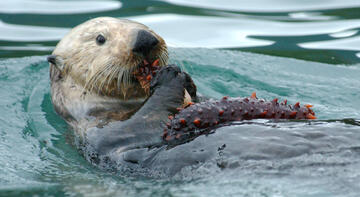
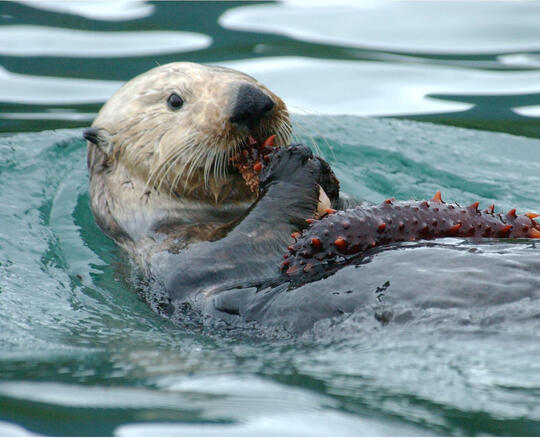
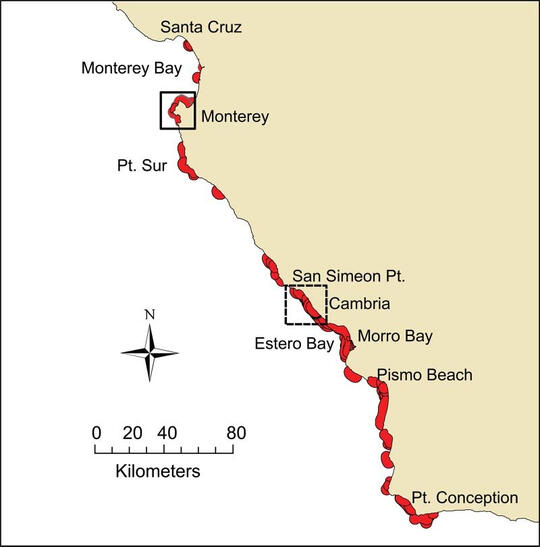
native to Californian coastal marine habitatsaquatic member of the weasel familyspends most of its time in waterkeystond species but also endangered
Reasons for Status
critical to maintaining balance of nearshore ecosystems, such as kelp forests, embayments, and estuarieswithout them, sea urchins can overpopulate sea floor and devour kelp forests that provide cover and food for many other marine animals
Characteristics
have very dense brown fur and strong, flat tail that acts as a rudderhave flipper-like hind feet and small front feet with retractable claws for grooming and holding onto food
Solutions for Protection
use nontoxic household cleaning productsdon't litter or dump materials into storm drainsreduce, reuse, and recycle whenever you candispose of hazardous wastes properlyvolunteer to help or create a beach clean up
Bibliography
"As top predators, sea otters are critical to maintaining the balance of nearshore ecosystems, such as kelp forests, embayments and estuaries. Without sea otters, sea urchins can overpopulate the sea floor and devour the kelp forests that provide cover and food for many other marine animals."
https://defenders.org/wildlife/sea-otter
"They have very dense brown fur and a strong, flat tail that acts as a rudder. They have flipper-like hind feet and small front feet with retractable claws that they use for grooming and holding onto their food."
https://www.theanimalfiles.com/mammals/carnivores/otter_sea.html